

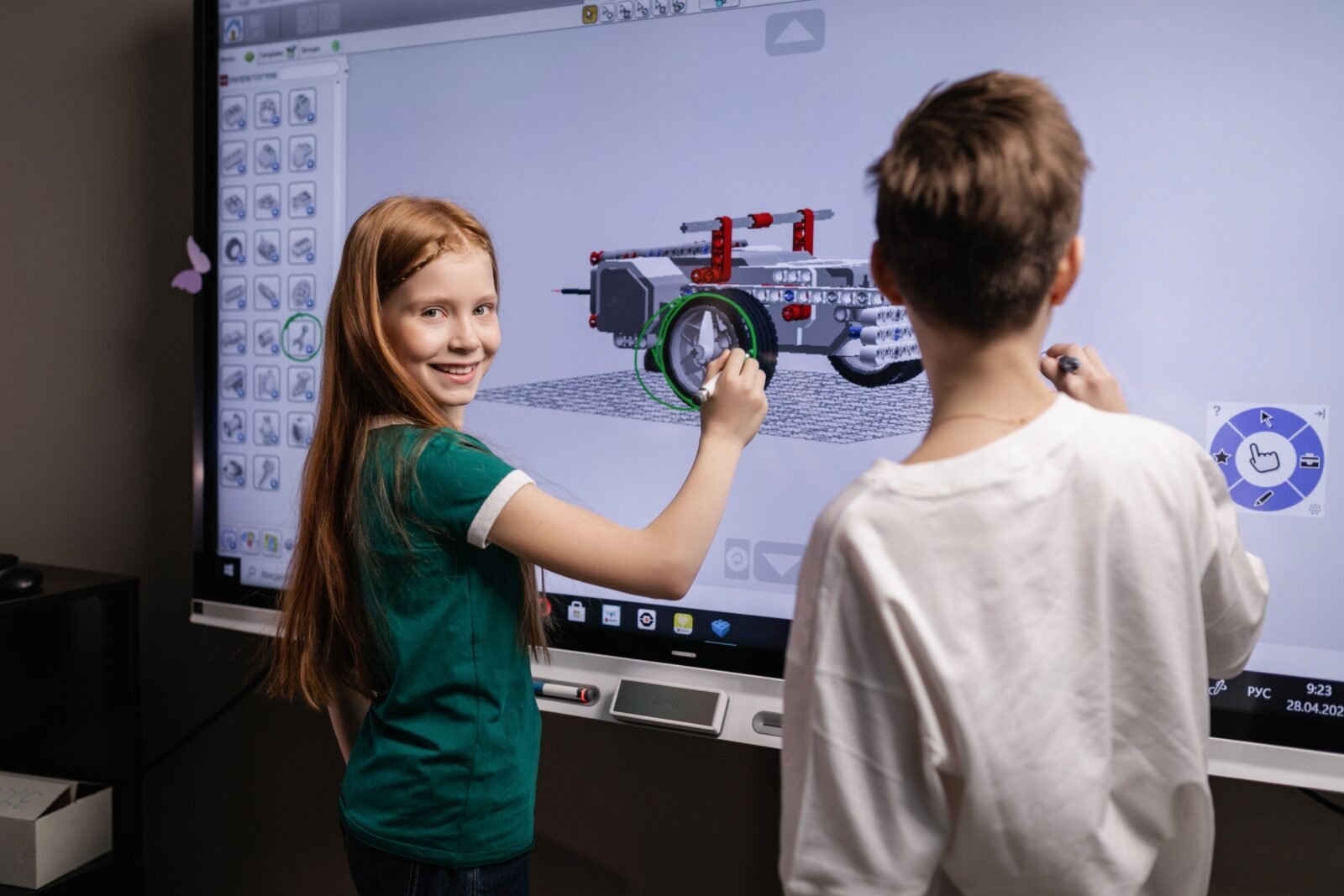
Science, technology, engineering and mathematics (STEM) are essential areas of learning that help children understand and interact with the world around them. Introducing these subjects through toys and hands-on activities can make education more engaging while encouraging curiosity and creativity. STEM toys provide opportunities for children to experiment, build, explore and solve problems in enjoyable ways. Choosing suitable activities for different ages can help develop valuable skills while making everyday playtime a meaningful learning experience.
Understanding the Educational Value of STEM Toys
STEM toys are designed to introduce children to scientific concepts, technology, engineering principles and mathematical thinking through practical activities. Unlike ordinary toys that mainly focus on entertainment, well-designed STEM toys guide encourage children to participate actively, explore possibilities and work through challenges. Building sets, science kits, coding games and mathematical puzzles can introduce different learning concepts without making children feel as though they are completing a formal lesson. These toys allow young learners to develop an understanding of how things work by experimenting with materials and discovering solutions independently. The combination of entertainment and education can make complicated ideas easier to understand and remember.
Another important advantage of STEM toys is their ability to encourage independent thinking and curiosity. Children can explore different ways of completing an activity, test their ideas and observe the results of their decisions. For example, constructing a tower using building blocks introduces basic concepts involving balance, structure and spatial awareness. Similarly, experimenting with simple science kits can help children understand cause and effect through direct observation. The most valuable learning experiences often come from toys that offer different possibilities rather than activities with only one predictable outcome. By encouraging children to think creatively and make their own discoveries, STEM toys can support meaningful learning beyond traditional classroom activities.

Choosing Age-Appropriate Toys for Different Learning Stages
Selecting STEM toys according to a child’s age and developmental abilities is important for creating enjoyable learning experiences. Younger children can begin exploring basic concepts through stacking blocks, shape sorters, simple construction toys and activities that demonstrate cause and effect. These resources help develop early problem-solving abilities, hand-eye coordination and an understanding of shapes, sizes and patterns. As children become more confident, they can explore slightly more challenging activities that involve building structures, sorting objects and following simple instructions. Choosing toys that match their current abilities helps prevent frustration while allowing them to gradually develop new skills.
As children grow older, their interests and learning abilities create opportunities for more advanced STEM activities. Children between approximately five and seven years may enjoy beginner coding toys, construction sets, pattern games and simple electronic circuits. Those aged eight to ten can explore robotics, more detailed building projects, science experiments and microscopes that introduce practical investigation. Older children may benefit from programmable devices, advanced engineering challenges and activities involving more complex mathematical reasoning. It is also useful to consider whether a toy can provide new challenges as a child develops. Toys with different difficulty levels and multiple ways to play can remain interesting for longer and provide continued opportunities for learning.
Exploring Different Types of STEM Toys and Their Benefits
There are many categories of STEM toys, each offering different opportunities for developing practical and intellectual abilities. Building and construction sets are particularly useful for introducing engineering concepts because children learn how different components fit together to create stable structures. Robotics and coding toys can introduce logical thinking, sequencing and basic programming through interactive challenges. Science kits encourage observation and experimentation, allowing children to explore subjects such as chemistry, physics and nature. Mathematical toys, including tangrams, counting resources and logic games, can strengthen number recognition, pattern identification and reasoning skills. Having access to different types of activities helps children explore their interests while developing a broad range of abilities.
Electronics and circuit kits can also provide valuable learning opportunities by showing children how different components work together to produce an outcome. Simple circuit-building activities introduce connections, electricity and cause-and-effect relationships in a practical way. Microscopes and telescopes offer another exciting opportunity by allowing young learners to investigate objects and explore the natural world from different perspectives. These activities can inspire questions about plants, insects, planets and other scientific subjects. When selecting these toys, parents should consider the child’s age, safety requirements and ability to use the equipment independently. Choosing activities that encourage repeated experimentation rather than providing only one predictable result can make STEM learning more rewarding and worthwhile.
Encouraging Creativity, Confidence and Independent Problem-Solving
One of the greatest benefits of STEM-based play is the opportunity it provides for children to develop confidence through independent problem-solving. When children build structures, complete puzzles or experiment with different materials, they often encounter challenges that require patience and creative thinking. Instead of immediately receiving instructions or answers, they can be encouraged to explore different approaches and discover what works. This process teaches them that mistakes are a natural part of learning and that problems can often be solved through experimentation. Developing this mindset can help children become more comfortable facing unfamiliar situations both inside and outside the classroom.
STEM toys can also strengthen communication and teamwork when children participate in activities with siblings, friends or parents. Working together on a construction project or science experiment encourages them to share ideas, listen to different opinions and explain their decisions. These interactions help develop social skills alongside practical knowledge and logical reasoning. Parents can further support learning by asking questions such as why a particular design works or what could be changed to improve the result. Giving children the freedom to explore their own ideas can make activities more engaging and help them feel proud of their achievements. Over time, these experiences can encourage independence, persistence and a stronger willingness to try new challenges.
Finding the Right Balance Between Fun, Learning and Value
Choosing the right STEM toys involves looking beyond attractive packaging, popular labels and expensive features. A useful educational toy should encourage children to think, experiment and participate rather than simply watch lights, sounds or pre-programmed movements. Parents can consider what specific skills an activity develops, whether it offers different ways to play and how well it matches the child’s interests. Open-ended construction sets, reusable science resources and logic games can provide valuable learning opportunities without requiring complicated technology. It is also worth checking product instructions, recommended age ranges and safety information before making a purchase. A carefully selected toy can provide more meaningful experiences than an expensive product that does not suit a child’s abilities.
It is equally important to create a healthy balance between screen-based activities and hands-on exploration. Digital coding games and interactive educational applications can introduce useful concepts, but practical toys allow children to handle materials, build objects and understand physical relationships directly. Combining different types of activities can provide a more varied learning experience while keeping children interested. Families do not necessarily need to invest in expensive equipment because simple building materials, measuring tools, household objects and puzzles can also introduce STEM concepts. Encouraging regular play, asking questions and allowing children to explore at their own pace can make learning a natural part of everyday life. Ultimately, the best STEM toys are those that inspire curiosity, encourage creativity and help children enjoy discovering new ideas.








Leave a comment