

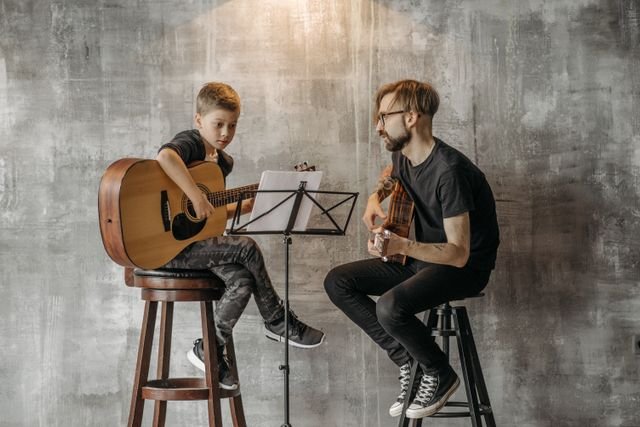
Playing the guitar has some of the highest dropout rates of any creative hobby in its very early days. It’s not because of the particular difficulty of the instrument itself, nor that most people aren’t gifted enough for it; it’s because the way most people start it is practically structured to ensure that result. How they learn is more important than what they’re learning, the online classes they take, or how many hours they practise before quitting.
The most frequent starting point for adults is an autodidactic one: watching tutorials, using chord apps, taking online classes, or getting a book from a music store. The quality of instruction in such cases can be really great. The problem is structural; there is nobody in the room who could help you spot and address technique issues. They may appear within weeks of practising, bad postures of the left hand, extra muscle tension of the right hand, and wrong timing issues will appear and become ingrained in your playing.
What the Research on Arts Participation Shows?
The National Arts Participation Survey 2025 of Creative Australia is the most comprehensive research on arts participation in Australia. The survey has revealed that individuals in Australia who have been exposed to an art form during their childhood through school are more likely to participate in arts as adults in creative activities such as practising or watching artistic performances. Music always remains among the most popular creative practices performed by individuals in Australia. Among other things, the relationship between structured learning of arts in childhood and later engagement in creativity has emerged as one of the most significant findings of the survey.
What One-on-One Instruction Provides?
Melbourne guitar lessons provide a kind of instant, personal feedback that is difficult to achieve in any other format. If a student makes a mistake in fingering a particular chord with their fretting hand, the teacher who is teaching in a physical setting immediately spots it and corrects it in the same minute. This is something a student who practises on their own does not have, which explains why technique errors accumulate subconsciously as the weeks pass by. Private instruction is completely customised based on the unique needs of each particular student and includes whatever style they prefer, be it acoustic finger-picking, electric blues, jazz chords, or something else.
The Group Class Trade-Off
A group music lesson has its use in some circumstances, such as younger musicians learning in an ensemble and community choirs. However, the trade-offs of group classes become more substantial for adults who want to focus on improving their technique. The pace of the class will be determined by the overall average of its participants. It is impossible to conduct the same amount of personal technical observation when there are eight students in sixty minutes. There is nothing unusual about adult players moving to private tutoring in order to find the pace they missed in the group setting.
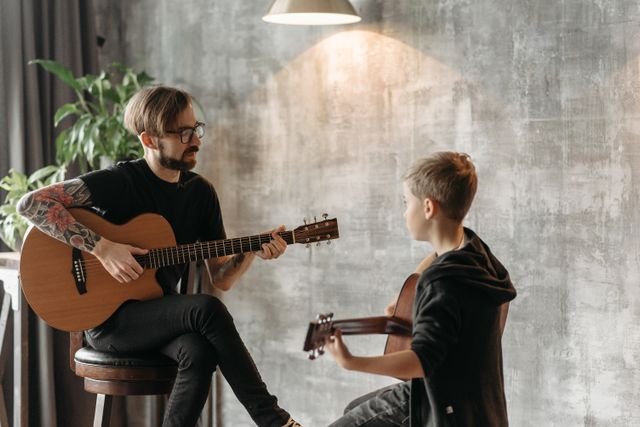
How Musical Goals Should Shape Lesson Structure?
The style of playing that a student wishes to learn should be used as a basis for the lesson structure from the very first class. Blues and rock players need scales and improvisation skills, whereas contemporary acoustic music requires chordal and rhythm techniques; classical guitarists need fingerpicking, dynamics, and the ability to read notation. Adults learn faster if they understand the reasons behind each exercise, not only what they should practise during their spare time. The approach used in teaching young students how to form their first chords differs considerably from the one required to teach adults who come back to the guitar after a long period.
The Box Hill area in the eastern part of Melbourne has a tradition of private lessons in music with a wide availability throughout the middle and outer eastern parts of the city.








Leave a comment